
Last Tuesday I showed four houses before 11am, squeezed in a 30-minute gym session on my lunch break, picked up two kids from school, and made it to a 6pm listing appointment without eating a real meal. By the time I got home my head was pounding and I had a dull ache behind my eyes that I kept blaming on stress. It wasn't stress. I was dehydrated. Not dramatically so, just the slow, creeping kind that sneaks up on you when hydration falls to the bottom of a to-do list that never gets shorter. The fix that actually stuck for me was an electrolyte powder, Ultima Replenisher, and I will walk you through how I use it.
If you work out on days like that, and most of us with busy lives do, plain water usually isn't enough to keep up. You lose electrolytes when you sweat, and plain water doesn't replace those. The result is that foggy, heavy-legged feeling that you chalk up to being tired when really your body is just running low on the minerals it needs to fire properly. I spent a long time figuring this out the hard way. Now I have a system, and it takes almost no extra time to follow.
Dehydrated by 2pm even when you drink water all morning? Your body needs more than water.
Ultima Replenisher packs six electrolytes into a zero-sugar stick that dissolves in seconds. Toss a few in your bag and you're covered all day. Over 20,000 people with 4.6 stars on Amazon.
Amazon Check Today's Price on Amazon →Step 1: Start Hydrating Before You Feel Thirsty
Thirst is a lag indicator. By the time your body signals that it wants water, you're already mildly dehydrated. On a regular non-workout day that lag is manageable. On a day when you're also sweating through a gym session or power-walking between showings, that lag compounds fast.
My rule now is 16 ounces of water before I leave the house, every single morning. I fill a large bottle the night before and leave it on the counter so there's no friction in the morning. No thinking about it, no looking for a bottle. It's just there. If I have a workout scheduled before noon, I also drop an electrolyte packet in that bottle, because sweating on an empty hydration tank is worse than just drinking plain water late.
This one change cut my mid-morning headaches almost completely in the first two weeks I started doing it. It's not a huge habit shift. It's just getting ahead of the problem instead of reacting to it at 2pm when you already feel terrible.
Step 2: Carry Something That Actually Replaces What You Lose
Water matters. But when you sweat, you're not just losing water. You're losing sodium, potassium, magnesium, chloride, and a few other minerals your muscles and nerves depend on. If you've ever had a workout where you drank plenty of water and still felt sluggish or got a cramp, that's likely why. Replacing fluid without replacing electrolytes leaves your body short on the components it needs to function.
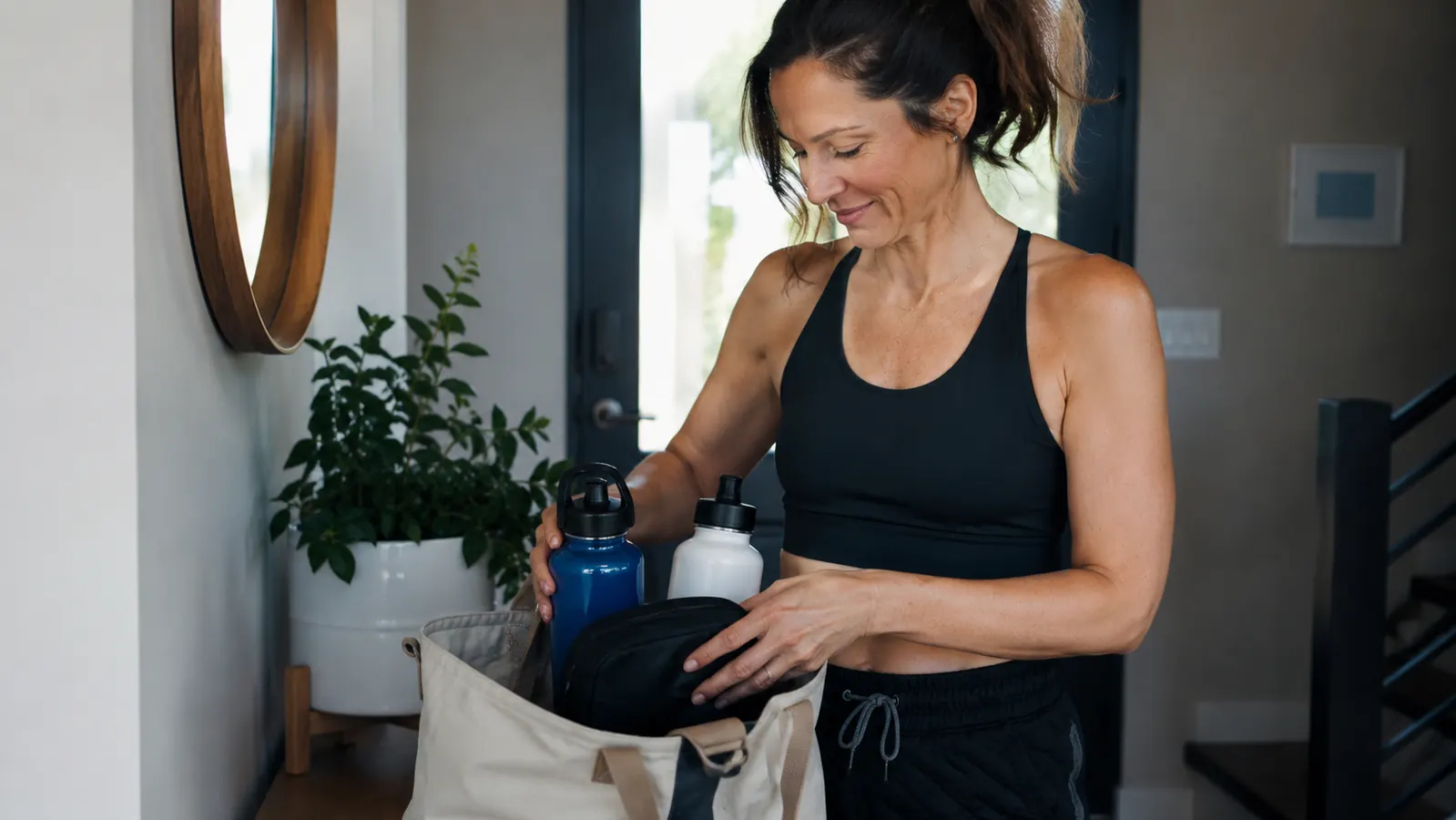
I started keeping Ultima Replenisher stick packs in my gym bag, my car's center console, and my purse. They dissolve in a regular water bottle in about 10 seconds, they have zero sugar, and they actually taste good enough that I look forward to drinking them rather than forcing myself to chug plain water. The variety pack includes six flavors so you can figure out which ones you like before committing to a larger order.
The combination of six electrolytes in one packet is what made the real difference for me. I'd tried some other options that were just sodium-heavy, and they didn't help much with the heavy-leg feeling. Ultima has the broader mineral profile, and on high-sweat days I notice the difference in how I feel late afternoon.

Step 3: Time Your Electrolytes Around Your Workout
When you take your electrolytes matters almost as much as whether you take them. If you wait until after your workout to start thinking about replenishment, you've already been running depleted for however long you were sweating. For shorter sessions of 30 to 45 minutes you can get away with replenishing after. For anything longer, or on days where you're also active outside the gym, I recommend splitting it.
What that looks like for me: one electrolyte packet in my water about 20 minutes before I start a workout, and a second packet mixed into a new bottle within 30 minutes of finishing. On heavy-sweat days, or when I know I have back-to-back activity without a real break to eat or rest, I sometimes add a third in the mid-afternoon. That sounds like a lot but each packet is under a dollar when you buy the larger pouches, so it adds up to less than most gas station drinks.

Step 4: Build Friction-Free Hydration Into Your Existing Routine
The reason most busy people fail at hydration isn't lack of willpower. It's that it requires a decision at exactly the moment you have the least mental bandwidth. You're rushing out the door, you're in back-to-back meetings, you're driving from one appointment to the next, and drinking enough water requires you to remember, locate a bottle, and find time to actually fill it. That's three friction points, any one of which can derail the whole thing.
The system I use removes almost all of that friction. One large bottle gets filled the night before and goes in the fridge. A small zip pouch with six to eight Ultima stick packs lives permanently in my gym bag. Another four or five packs live in my car. When I'm leaving for a showing, I grab the bottle. When I hit the gym, the electrolytes are already there waiting. I don't have to plan, shop, or decide in the moment. The habit runs on infrastructure, not memory.
I also set a reminder on my phone for 3pm every day. That's my typical energy dip window, and it's when I'm most likely to reach for coffee instead of water. The reminder just says 'drink water.' Sometimes I add an electrolyte packet if the day has been physically demanding. It takes 30 seconds and it genuinely affects how functional I am for the rest of the afternoon.

Step 5: Rehydrate Before Bed, Not Just After Your Workout
This one took me a while to figure out. I was doing okay with daytime hydration but waking up with stiff legs and a dry mouth even on days I felt like I'd done everything right. The problem is that hydration has a long tail. The fluid and minerals you lose during a morning workout don't fully catch up until you've had hours to reabsorb and your body isn't actively using everything for digestion and activity.
A small glass of water, maybe eight to ten ounces, 20 to 30 minutes before bed made a meaningful difference in how my legs and joints felt the next morning. On hard training days I mix in half an electrolyte packet rather than a full one. I don't want to flood my system right before sleep, but a light replenishment helps my body do overnight recovery work without being short on minerals.
This isn't a magic fix and I'm not saying it eliminates soreness. What I can say is that waking up already behind on hydration makes everything the next day harder: workouts feel sluggish, focus is slower, and the afternoon crash hits earlier. A small pre-bed drink is cheap insurance against all of that.

What Else Helps
Hydration is the foundation, but a few other habits support it and make the whole system work better. Eating foods with high water content, things like cucumbers, watermelon, oranges, and leafy greens, gives you background hydration you don't have to think about. On the days when you know you're going to sweat heavily, a small salty snack before your workout, a few pretzels or a pinch of sea salt in your water, can help you absorb fluid more effectively rather than passing it right through.
Caffeine is worth flagging here. I'm not anti-coffee, I drink it every morning, but caffeine has a mild diuretic effect, meaning it pushes fluid out slightly faster. If you're already behind on hydration and you lean on coffee to get through a busy afternoon, you may be making the hole deeper rather than climbing out of it. I now pair every coffee with a full glass of water, not right after, just at the same sitting. It's a small counterbalance.
Also worth mentioning: alcohol after a heavy workout day really does set back recovery. I know that's not what anyone wants to hear after a long Thursday showing houses all day and then hitting a cardio class. But even one or two drinks when you're already mildly depleted slows rehydration noticeably. On those days I try to get at least 20 ounces of water in before I have anything else.
Once I stopped treating hydration like a chore to fit in and started treating it like infrastructure to build, the afternoon wall I used to hit at 3pm almost disappeared.
If you want to dig deeper into why electrolyte powder specifically outperforms sports drinks for recovery-focused hydration, I put together a breakdown of the main differences that's worth reading alongside this. The short version is sugar load and mineral breadth, but the details matter. You can also read my full Ultima Replenisher electrolyte review where I tested it over two months through workouts, long work days, and travel. And if you're comparing options, the 10 reasons electrolyte powder beats sports drinks piece covers that comparison directly.
The easiest upgrade to your hydration routine costs less than a dollar per day.
Ultima Replenisher variety pack gives you 20 stick packs across six flavors with zero sugar and a full electrolyte profile. Try a few flavors, find your favorite, and keep them everywhere you go. Rated 4.6 stars by more than 20,000 Amazon shoppers.
Amazon Check Today's Price on Amazon →